- Event Pulse
- Posts
- Know Your Risk. Name Your Event.
Know Your Risk. Name Your Event.
Newsletter 186: Two stories about the decisions that define your event

Camelia Yeung
April 13, 2026
Welcome back to The Event Pulse. This edition arrives in a week when the events industry has been reminded, loudly and expensively, that every decision we make carries weight and that weight is felt by audiences, sponsors, and stakeholders long before the doors open.
Two stories caught my attention this fortnight, and while they seem worlds apart on the surface, they're really asking the same question: how honest are we being with our audiences, our partners, and ourselves about the choices we make? The first takes us inside the spectacular collapse of Wireless Festival's 2026 season, and what the industry fallout tells us about risk, dependency, and the limits of bold thinking. The second takes its cue from an unlikely source, a Netflix animated film, to explore why the simplest, most transparent thing you can do as an event professional might also be the most strategically powerful: calling your event exactly what it is. Both stories are, at their core, about honesty. One shows us what happens when we avoid it. The other makes the case for leading with it. I hope you find both useful.
New to Event Pulse? Subscribe to get bi-weekly insights on what's working in the event industry. No fluff, just practical strategies you can use. Join event professionals across the globe who are rethinking how experiences get made.
Risk Is It Worth It? What the Wireless Festival Disaster Should Teach Every Event Planner
Have you been following the Wireless Festival story? I have, and a piece published this past weekend in the Guardian summarizes the risks and consequences so compellingly that I couldn't write this month's newsletter about anything else. It is, in the starkest possible terms, a masterclass in what happens when bold decision-making outruns strategic thinking—and the lessons it holds for anyone planning events are urgent and transferable.
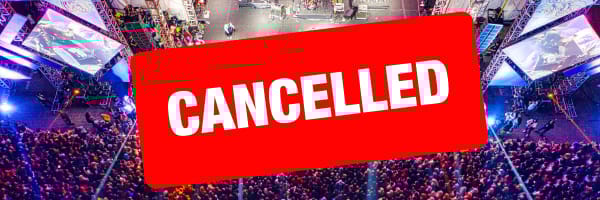
Here's a quick recap if you've missed it. Wireless Festival, one of the UK's biggest summer music events, announced Ye (formerly Kanye West) as its 2026 headliner. Within days, major sponsors including Pepsi and Diageo had withdrawn. UK Jewish groups threatened protests. The Prime Minister called the booking deeply concerning. By Tuesday of that same week, the festival - scheduled for Finsbury Park in July - was cancelled after the UK government refused Ye entry into the country. A flagship moment in the British summer calendar, gone, in under a week.
The Guardian spoke to senior figures across entertainment law, PR, and music insurance to understand how it unravelled so fast. Their answers are illuminating and at times, damning.
The House of Cards Problem
A senior partner at a major entertainment law firm, speaking anonymously, described the entire enterprise as built on a house of cards. Once the sponsors left, there was no realistic path to replacing them in the available timeframe. The economics collapsed almost immediately.
This is the first lesson for event planners: understand your dependency map before you make any bold move. Who are the stakeholders that hold your event together financially? If one or two of them walked tomorrow, could your event survive? For Wireless, the answer was clearly no, and that fragility should have been the starting point of any risk conversation, not an afterthought.
Known Risks Are Not Acceptable Risks
Perhaps the most uncomfortable detail in the Guardian's reporting is this: Ye had taken out a full-page advertisement in the Wall Street Journal in January, apologising for past antisemitic statements. The booking was made after that apology was already public. Everyone knew. The entertainment lawyer quoted in the piece was blunt: any competent legal adviser should have seen the fallout coming.
Festival Republic's head, Melvin Benn, defended the decision by pointing to Ye's bipolar disorder diagnosis, suggesting his most inflammatory statements were made during a manic episode. A PR expert quoted in the Guardian found this defence understandable but ultimately unconvincing, noting that a major music festival was simply not the right arena in which to test that argument.
For event planners, this is a critical distinction: a known risk is not a manageable risk just because you've acknowledged it. Naming the problem is not the same as solving it. If your due diligence turns up a red flag, you need a concrete plan for what happens when that flag is raised publicly, not a post-hoc explanation.
Stakeholders Deserve a Seat at the Table
One of the most striking revelations in the Guardian piece is that at least one major Wireless sponsor was not consulted before Ye's booking was announced. They found out when the rest of us did: through the media. By that point, the damage was already in motion.
This is an error that has nothing to do with the specifics of Ye or antisemitism or festival culture. It is a straightforward governance failure that could happen at a corporate conference, a brand activation, or a charity gala. If someone's name, money, or reputation is attached to your event, they must be part of sensitive decisions before those decisions go public. Discovering you're co-signed to a controversy via a press announcement is not something sponsors forget quickly.
Insurance Won't Save You From Everything
Martin Goebbels, who leads the music and touring department at Miller Insurance and has over four decades of industry experience, told the Guardian that the Wireless situation put the entire sector in uncharted waters. One of the emerging consequences he flagged: insurers may now begin explicitly excluding visa cancellations from event policies, a category of risk that barely existed as a consideration before this week.
The broader point for event planners is that insurance is a safety net, not a strategy. As the Guardian reports, Ye is still technically insurable as a touring artist, but any policy he could now obtain would likely consume a significant portion of his performance fee. The risk hasn't disappeared; it has just been priced in, expensively.
Before your next major booking or headline decision, it's worth a direct conversation with your insurer about precisely what is and isn't covered in a cancellation scenario. Don't assume. Ask.
The Moral of the Story
The Guardian frames this as an industry-wide wake-up call, and I think that's right. The entertainment lawyer quoted in the piece puts it plainly: the main lesson is never to underestimate the strength of public opinion. Promoters and festival organisers may now have to approach bookings as calculated risks in a way they simply didn't before.
But I'd go one step further. Wireless didn't fail because they took a risk. Plenty of bold bookings pay off. They failed because they took a risk without fully stress-testing it: without asking who could walk; who hadn't been consulted; what the insurance actually covered; and whether their defense strategy would hold up under public scrutiny.
Every event planner, regardless of scale, faces a version of this calculation. The question is never simply, Is this worth the risk? The question is, have we done the work to actually know?
The full Guardian investigation by Eamonn Forde and Sarah Butler is essential reading - here’s the link to the article.
I'd love to know your thoughts: how do you manage reputational risk in your own events? Reply and let me know.

Name It Like You Mean It: Why Clarity Is the New Strategy in Event Titling
What a Netflix animated film taught me about audience respect.
Recently, Maggie Kang, co-director and creator of the 2025 Netflix animated film KPop Demon Hunters, explained in an interview why the film has the title it does. The answer was refreshingly simple: she wanted it to be blatantly obvious what the film is about. No mystery. No metaphor. Just the thing itself, stated plainly. The film went on to become Netflix’s the most-watched movie ever, passing 236 million views as of August 2025. Whether the title had anything to do with that is debatable. What is not debatable is that the instinct behind it reflects a genuine shift in how creators, marketers, and yes, event professionals, are thinking about naming.
I think there is something important in that instinct for our industry. So I want to break it down honestly: where clarity-first naming works, where it doesn’t, and what it means for how we title events, sessions, and experiences in an increasingly algorithm-driven world.
The Scroll Economy Is Real
Let’s start with the context. Research from TiVo found that only around 15% of people in North America know what they want to watch when they open a streaming app. A separate Google-commissioned study found that nearly half of streaming subscribers have cancelled a service not because the content was bad, but because they could not find anything to watch. The content existed. Discovery failed.
The events industry has an identical problem, but we have been slower to acknowledge it. A prospective attendee lands on your event website, or comes across your session listing in an app, and has approximately three seconds to decide whether it is relevant to them. If your event is called Elevate Summit; or your session is titled The Future of Human Connection; you have told them almost nothing. They scroll on.
This is the core argument for descriptive naming: in a world where attention is scarce and competition for it is extreme, clarity is a competitive advantage. When someone sees How CFOs Are Cutting Event Budgets Without Cutting Attendance; they know immediately whether that session is for them. The right person self-selects in. The wrong person moves on. Both outcomes are correct.
Algorithms Do Not Respond to Aspiration
If your event relies on internet-based promotion, and most events do, this conversation becomes even more concrete. Search engine algorithms, social media discovery feeds, and event platform search tools all operate on the same basic logic: they match keywords in your content to keywords in a user’s query. They do not interpret intent. They do not reward elegance. They surface relevance.
When you name your conference Horizon; or your workshop series “The Catalyst Programme; you are creating a discoverability gap. Nobody is searching for those words in connection with their professional development needs. They are searching for sustainability conference for architects; or workshop on AI tools for event planners. If your naming does not meet them where they are searching, your SEO strategy is working against your brand strategy.
This applies to individual session titles just as much as it applies to event names. Event apps now use search functions, and attendees use them actively to build their schedules. A session called Rethinking Engagement; will lose every time to Five Ways to Increase Attendee Participation Without Gamification. The second title is longer. It is also findable, shareable, and self-describing. It does the marketing work so the marketing team does not have to.
The Case For: Pros of Clarity-First Naming
Beyond searchability, descriptive naming offers several real advantages for events that are still building their audience and reputation.
First, it reduces friction in the buying decision. When a potential attendee can understand the value proposition of your event from the name alone, you have shortened the sales journey. They do not need to dig through your website to figure out if this is relevant to them. You have already answered the question.
Second, it sets accurate expectations. One of the most damaging outcomes in the events industry is an attendee who arrives expecting one thing and receives another. Descriptive naming acts as a filter, bringing in people who genuinely want what you are offering and reducing the post-event feedback that reads this was not what I expected.
Third, it makes word-of-mouth more effective. When someone tells a colleague about your event, they repeat what they understood it to be. If your name is clear, the referral is accurate. If your name is abstract, the referral becomes a game of telephone.
The Case Against: When Clarity Is Not the Point
I want to be direct about where this argument breaks down, because it does break down in certain contexts.
Davos does not explain itself. Neither does TED. Cannes Lions does not include the words advertising industry creativity awards in its name. These are not oversights. They are deliberate signals. When a name has become synonymous with prestige, ambiguity is part of the brand. The implication is that if you need to ask what it is, it may not be for you. That exclusivity has value, and it is earned through decades of consistent delivery and cultural cachet.
The problem is that most of us are not running Davos. Most events in this industry are three to ten years old, operating in competitive verticals, and relying on digital channels to reach new audiences. The rules that apply to established global institutions simply do not apply to a regional healthcare conference in its fourth year or a new DEI leadership summit trying to differentiate itself in a crowded market.
There is also a legitimate creative argument against purely functional naming: it can feel flat. A name like Annual Procurement Leadership Conference is findable but forgettable. The best naming sits in the middle ground: it communicates clearly while still having some energy, character, or distinctiveness. That is a harder brief, but it is the right one to aim for.
A Framework for the Room (my secret sauce)
When this comes up in planning meetings, which it does more and more as clients become aware of their own discoverability challenges, I use a simple test. Ask two questions about your proposed event or session name.
The first question: could someone who has never heard of you understand what this is about from the name alone? If the honest answer is no, that is a warning sign, not a creative choice.
The second question: would someone search for these words? Think about the actual phrase a member of your target audience would type into Google or an event platform search bar. If none of those words appear in your event name or session title, your name is invisible to the algorithm and to the person behind it.
If you pass both tests, you have something worth building a brand around. If you fail one or both, the name needs work, regardless of how good it sounds in the room.
Clarity Is a Form of Respect
What Maggie Kang said about naming KPop Demon Hunters was not a sophisticated marketing strategy. It was a statement about respecting the audience’s time. She knew who the film was for, and she told them directly. That is something we can and should bring into every naming conversation we have in this industry.
Abstract names made more sense in an era of printed brochures and word-of-mouth referrals, where your audience was largely already in the room. We no longer operate in that era. Our audiences are scrolling, searching, and making split-second decisions about relevance every day. The least we can do is meet them halfway.
Name it like you mean it. The algorithm will notice. More importantly, the right attendee will notice.
Event Pulse delivers actionable strategies and fresh perspectives on the event industry every two weeks. No generic advice, no rehashed trends—just real examples and practical frameworks you can apply to your next event.
Subscribe now and join event professionals who are designing experiences people actually want to attend.
Reply